SSDN Technologies
12 February 2026
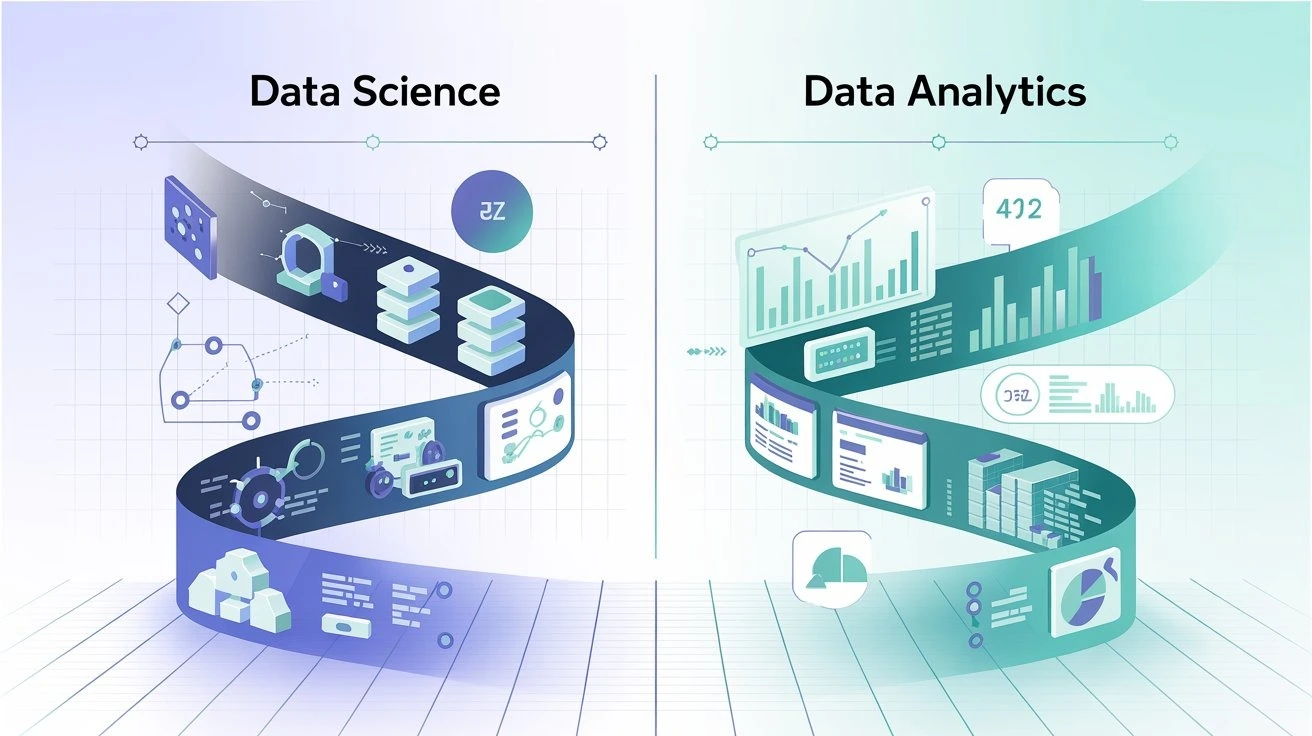
In today’s digital world, data is one of the most valuable assets for businesses. However, many students and working professionals often get confused between Data Science and Data Analytics. While both fields deal with data, their purpose, tools, and career paths are different. If you are planning to enrol in a Data Science Course or a Data Analytics Course, understanding the difference will help you make the right decision for your career.
Data Analytics focuses on examining historical data to identify patterns, trends, and insights. The primary goal is to answer questions like:
Professionals in this field collect, clean, and analyse structured data to create reports and dashboards that support business decision-making. A typical Data Analytics Course teaches tools such as Excel, SQL, Power BI, Tableau, and basic Python. The emphasis is more on visualisation, reporting, and interpreting data rather than building complex predictive models.
Data Analytics is ideal for those who want a quicker entry into the IT industry and prefer working with business intelligence tools rather than advanced programming.
Data Science is a broader and more advanced field that not only analyses past data but also predicts future outcomes. It answers questions like:
A Data Science Course includes programming (Python or R), statistics, machine learning, deep learning, and data modelling. Data Scientists build predictive models and algorithms that can forecast sales, detect fraud, recommend products, and even power AI systems.
Compared to analytics, data science requires stronger mathematical knowledge and coding skills. It is suitable for students who are comfortable with programming and want to work in AI, Machine Learning, or research-based roles.
1. Scope
Data Analytics is a subset of Data Science. While analytics focuses on interpreting existing data, data science covers data collection, cleaning, analysis, modelling, and prediction.
2. Complexity
Analytics is generally less complex and more business-focused. Data science involves advanced algorithms, statistical modelling, and machine learning techniques.
3. Tools and Technologies
Data Analytics commonly uses Excel, SQL, Power BI, and Tableau. Data Science uses Python, R, TensorFlow, Scikit-learn, and big data technologies like Hadoop and Spark.
4. Career Roles
After completing analytics training, you can work as a Data Analyst, Business Analyst, or Reporting Analyst. Data science training prepares you for roles such as Data Scientist, Machine Learning Engineer, or AI Engineer.
5. Salary and Growth
Data Scientists generally earn higher salaries due to the technical complexity and demand for AI-based solutions. However, both fields offer strong career growth and job stability.
Your choice depends on your background, interests, and career goals.
Choose Data Analytics if:
Choose Data Science if:
If you are unsure, starting with analytics and gradually moving toward data science is also a practical approach.
Both Data Science and Data Analytics are in high demand across industries such as finance, healthcare, e-commerce, IT, and marketing. Companies rely heavily on data-driven decisions to improve efficiency and customer experience.
Organisations prefer candidates trained by a Best IT Training Company that provides hands-on projects, real-time case studies, and industry exposure. Practical experience plays a crucial role in securing high-paying roles in this competitive market.
Choosing the right institute can make a significant difference in your learning journey. Institutes like SSDN Technologies focus on industry-oriented curriculum, live projects, and expert mentorship to help students build job-ready skills. Whether you select analytics or data science, proper guidance and structured training are essential for career success.
Although Data Science and Data Analytics sound similar, they serve different purposes in the data ecosystem. Analytics helps businesses understand past performance and make informed decisions, while data science predicts future trends and builds intelligent systems.
If your goal is to enter the IT field quickly with business-focused skills, Data Analytics is a great choice. If you want to dive deeper into AI, Machine Learning, and advanced modelling, Data Science offers broader opportunities and higher growth potential.