SSDN Technologies
02 November 2026
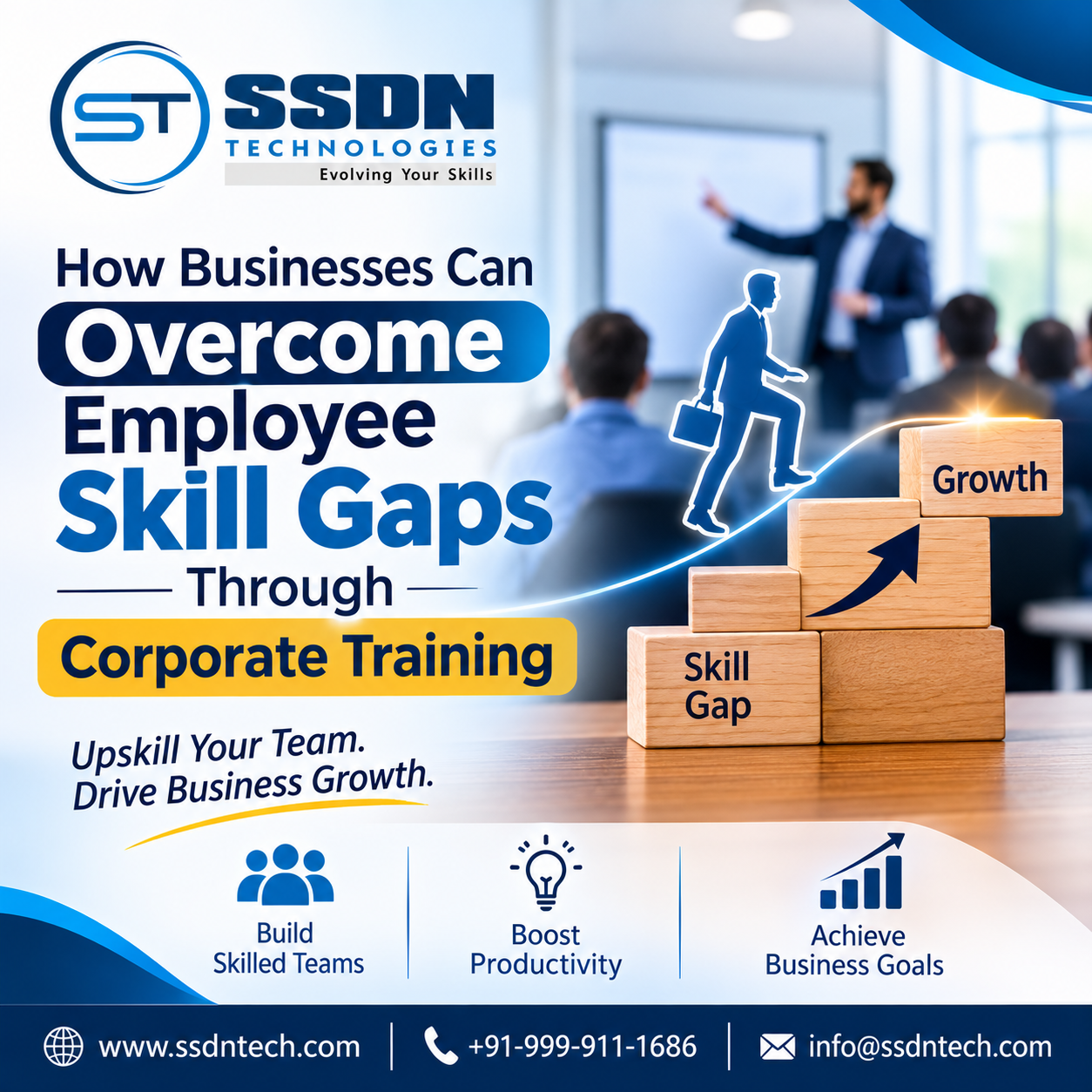
In today's competitive business environment, employees need the right knowledge and professional skills to perform their responsibilities effectively. However, many organizations face challenges when employees lack the technical expertise, communication abilities, or practical experience required for their roles. These skill gaps can affect productivity, teamwork, and overall business performance. Corporate training provides a structured approach to identifying these gaps and developing the capabilities employees need to support organizational growth.
Employee skill gaps occur when the existing knowledge and abilities of employees do not match the requirements of their job roles. These gaps may develop because of changing technologies, new business processes, evolving customer expectations, or limited learning opportunities.
For example, employees may need additional technical knowledge to work with new software, while managers may require better leadership and decision-making skills. Identifying these gaps helps businesses understand where improvement is needed and develop suitable learning strategies.
Corporate training helps organizations improve employee capabilities through structured learning programs. Businesses can assess workforce requirements, identify areas for improvement, and provide relevant training to employees based on their responsibilities.
A well-designed Corporate Training Course can cover technical knowledge, communication, leadership, project management, problem-solving, and other professional skills. Practical exercises and real-world examples also help employees understand how to apply their learning in everyday work situations.
Selecting an experienced training provider is important for achieving effective learning outcomes. Businesses should evaluate the provider's industry experience, trainer expertise, course structure, practical learning approach, and ability to understand specific organizational requirements.
Working with a Best Corporate training company can help organizations develop suitable learning strategies that address employee skill gaps and support business objectives. A reliable training partner should offer relevant programs that match the organization's current and future workforce needs.
Employee development should not be limited to technical knowledge. Leadership, communication, negotiation, and customer relationship management are equally important for organizational success.
Providing Best B2B sales Training helps sales professionals understand customer requirements, improve negotiation techniques, develop effective communication skills, and build stronger business relationships. Similarly, leadership training helps managers guide employees, make informed decisions, and improve team performance.
These development initiatives help organizations create confident professionals who can contribute more effectively to business goals.
Training effectiveness should be evaluated to understand whether learning initiatives are delivering the expected results. Organizations can measure improvements through employee performance assessments, practical evaluations, feedback, productivity levels, and progress towards business objectives.
A reliable Best Training Company can support organizations in developing structured learning approaches and evaluating employee progress. Regular assessments also help businesses identify remaining skill gaps and plan future training requirements.
SSDN Technologies provides professional IT and corporate training solutions designed to support individual learning and organizational development. The company focuses on helping professionals strengthen their technical knowledge, improve practical capabilities, and stay updated with evolving industry requirements.
Through structured training programs and industry-relevant learning opportunities, SSDN Technologies supports businesses in developing skilled employees and improving workforce capabilities. Organizations can explore suitable training solutions based on their technical requirements, employee skill levels, and business objectives.